In Situ Raman Electrochemical Cells
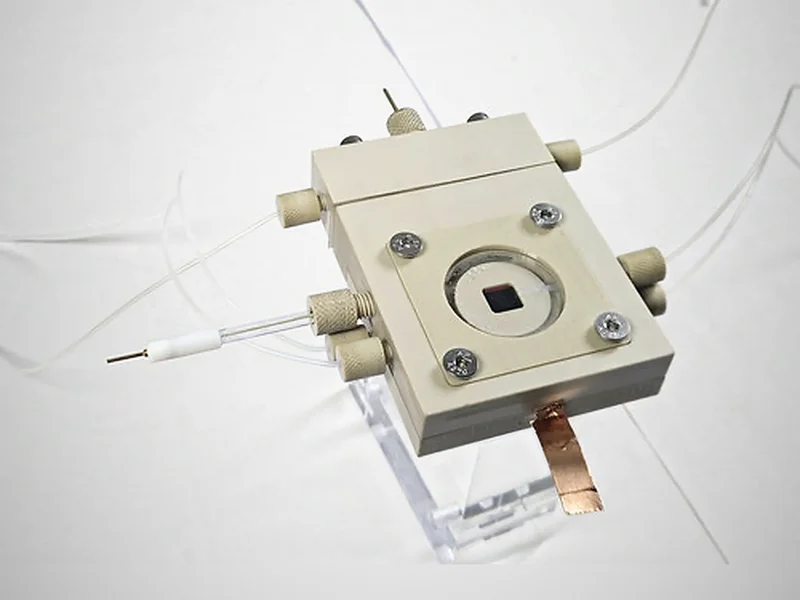
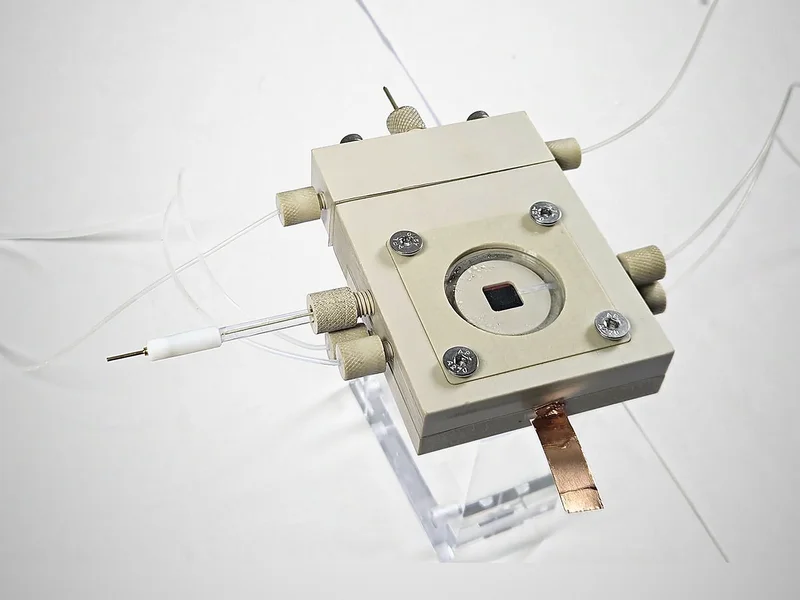
An in situ Raman electrochemical cell holds the working electrode just behind an optical window, so a Raman microscope can record spectra while the reaction runs. METNMAT sells a two-compartment cell with a Ø35 mm quartz window and the IRE-4 PEEK cell with a sapphire window and a 3 mm working distance.
What is an in situ Raman electrochemical cell?
It is an electrochemical cell built for a Raman microscope: the working electrode faces a quartz or sapphire window a short distance away, and ports carry the reference and counter electrodes, the electrolyte and gas. Spectra are taken while the potential is applied, which is what in situ and operando mean.
Raman spectra show the bonds present at the electrode surface, so the cell lets you watch a catalyst change, and reaction intermediates form, during CO₂ reduction, water splitting and other reactions.
How to choose an in situ Raman cell
- Window
- Quartz and sapphire both pass the laser; sapphire is harder and resists scratches better.
- Working distance
- A short gap between the window and the electrode keeps the liquid layer the laser crosses thin.
- Two compartments
- A membrane between the chambers keeps the products of the counter electrode away from the surface you are measuring.
Price list
| Product | Price incl. GST |
|---|---|
| In Situ Raman Electrochemical Cell for Operando Raman Spectroscopy | ₹1,76,999 |
| Dual Chambered In-Situ Raman Spectroscopy Cell With Single Light Window | ₹1,76,999 |
Frequently asked questions
What is the price of in situ Raman cells in India?
Prices for METNMAT's in situ Raman cells are ₹1,76,999 including GST, with shipping within India from ₹200 and a GST invoice. Each product page shows its exact price.
Where can I buy in situ Raman cells in India?
From METNMAT, a supplier of in situ Raman cells based in Howrah, West Bengal. Order online with shipping within India from ₹200 and a GST invoice, or use Request for Customization for a size that is not listed.
What is an in situ Raman electrochemical cell?
An electrochemical cell with an optical window close to the working electrode, so Raman spectra can be recorded while the electrode is under potential.
What can operando Raman show?
How the catalyst surface changes, and which intermediates form, as the potential changes: for example during CO₂ reduction or oxygen evolution.