Platinum Wire Electrodes
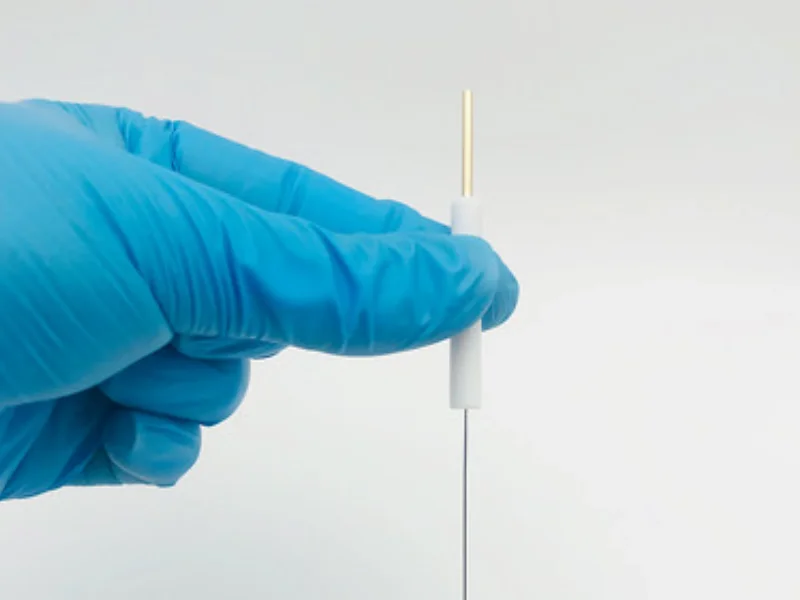
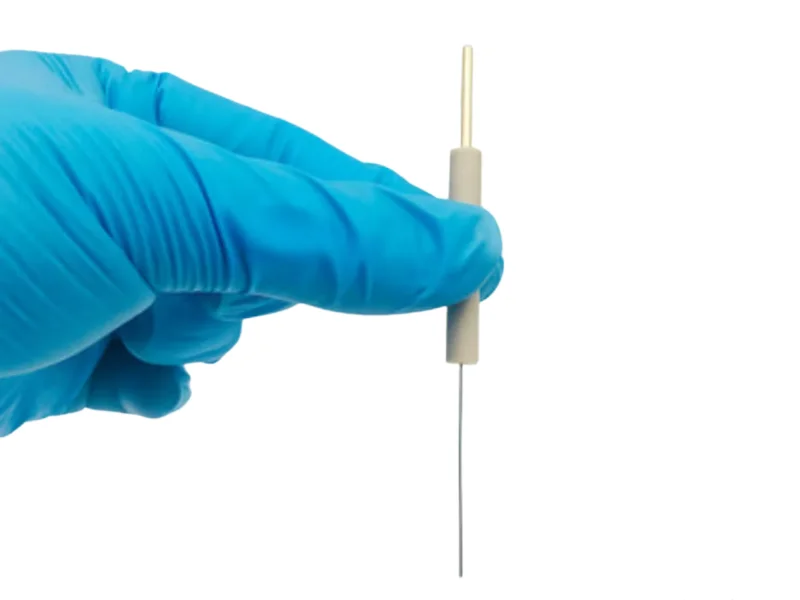
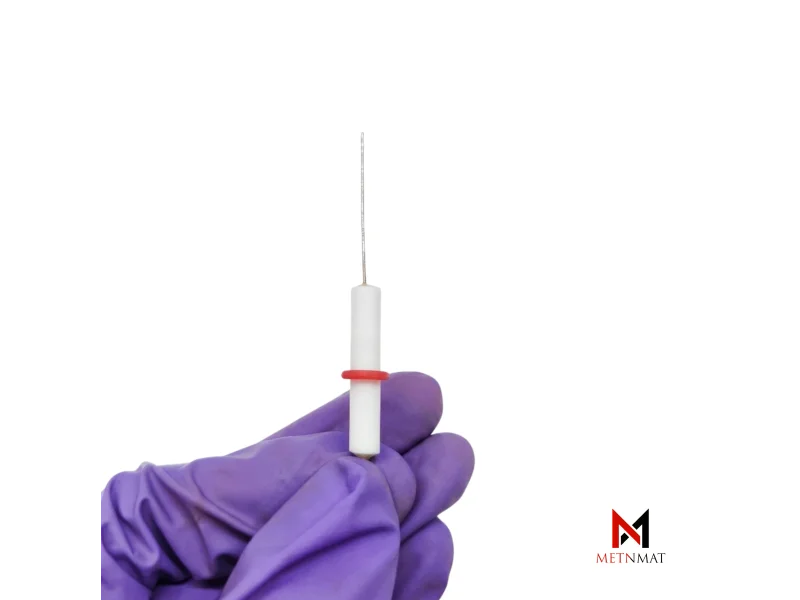
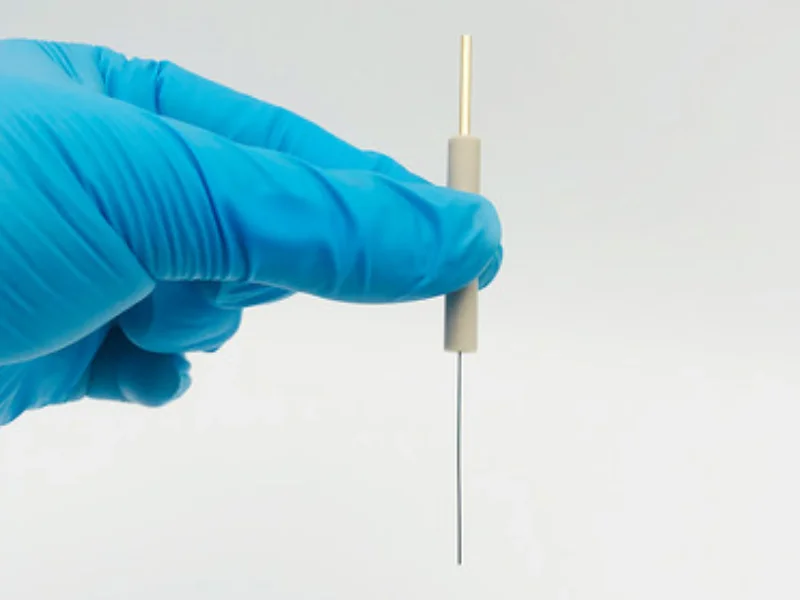
A platinum wire electrode, or Pt wire electrode, is a length of platinum wire on an insulated rod. It is the most common counter electrode, also called an auxiliary electrode, because it stays inert and fits narrow ports. METNMAT sells platinum wire electrodes on PTFE and PEEK rods.
How to choose a platinum wire electrode
- Wire diameter
- A thicker wire is sturdier and has more surface for its length.
- Rod material
- PTFE is the most chemically inert. PEEK is stiffer and handles heat better.
- Surface area
- The counter electrode should have more surface than the working electrode, so that it does not limit the current.
- When a wire is too small
- For large working electrodes, choose a mesh or a sheet instead.
Price list
| Product | Price incl. GST |
|---|---|
| Platinum Wire Counter Electrode Ø0.5 × 37mm PTFE Rod | ₹29,500 |
| Platinum Wire Counter Electrode (PEEK Rod) | ₹35,400 |
| Platinum Wire Counter Electrode (PTFE Rod) | ₹35,400 |
| Platinum Wire Counter Electrode Ø0.5 × 37mm PEEK Rod | ₹59,000 |
Frequently asked questions
What is the price of platinum wire electrodes in India?
Prices for METNMAT's platinum wire electrodes run ₹29,500 to ₹59,000 including GST, with free shipping within India and a GST invoice. Each product page shows its exact price.
What is a platinum wire electrode used for?
Mostly as the counter electrode in a three-electrode cell, where it carries the current while the working electrode is measured.
What is the difference between a counter and an auxiliary electrode?
Nothing. They are two names for the same electrode.
Can I use a platinum wire for hydrogen evolution studies?
Take care. Platinum can dissolve from the counter electrode and redeposit on the working electrode, which inflates catalyst activity. Many labs use graphite for this work.