Introduction to Metallurgy: Exploring the Science of Metals
Explore the fascinating world of metallurgy in this comprehensive article. From ancient origins to modern advancements, delve into the extraction, properties, and applications of metals.
- Authors
- Mukesh Kumar
- Published
- Updated
- Updated 3 Nov 2026
- Reading time
- 5 min read

- Keywords
- Metallurgy, Metals, Extractive metallurgy, Heat treatment, Alloying
Explore the fascinating world of metallurgy in this comprehensive article. From ancient origins to modern advancements, delve into the extraction, properties, and applications of metals.
Introduction: Metallurgy
Metallurgy, the study of metals and their properties, has played a crucial role in the progress of human civilization. From ancient times to the modern era, the science of metallurgy has been instrumental in shaping various industries, technologies, and societies. In this article, we will explore the fascinating world of metallurgy, from its historical significance to its modern applications and beyond.
What is Metallurgy?
Metallurgy is the branch of science and engineering that deals with the study of metals, their extraction from ores, refining, and the manipulation of their properties through various processes. It encompasses both the theoretical understanding of metal behavior at the atomic level and the practical application of this knowledge in real-world scenarios.
Historical Significance of Metallurgy
The roots of metallurgy can be traced back to the ancient Near East and Mesopotamia, and later to civilizations such as the Egyptians, Greeks, and Chinese. These early cultures discovered techniques for extracting and working with metals, paving the way for advancements in tools, weapons, and infrastructure. Metallurgy played a significant role in the development of human society, leading to the Bronze Age and Iron Age, which revolutionized human capabilities.
The Structure of Metals
Metals have a unique atomic structure characterized by closely packed atoms arranged in a crystalline lattice. This arrangement imparts several exceptional properties to metals, including high conductivity, malleability, and ductility. Understanding the atomic structure of metals is fundamental to comprehending their behavior and properties.
Physical Properties of Metals
Metals possess a wide range of physical properties that make them indispensable in various applications. These properties include conductivity, density, melting and boiling points, and thermal expansion. We will delve into the significance of these properties in different industries and everyday life.
Chemical Properties of Metals
The chemical properties of metals determine how they interact with other elements and compounds. Some metals are highly reactive, while others are more stable and resistant to corrosion. Understanding these chemical properties helps in selecting the right metals for specific applications and preventing degradation over time.
"Unlock the potential of metals through alloying and heat treatment. This article brings you a detailed journey into the heart of metallurgy." - Metnmat Research and Innovation
The Metallurgical Process
The metallurgical process involves a series of steps to transform raw ores into pure metals. This includes mining, crushing, grinding, and smelting. Each step requires precision and expertise to ensure the production of high-quality metals for various uses.
Extracting Metals from Ores
Ores are naturally occurring rocks that contain metal elements in their compound form. Extracting metals from ores is a complex process that demands the use of advanced techniques, such as hydrometallurgy and pyrometallurgy. This section will explore the methods employed in obtaining metals from their ores.
Alloying: Enhancing Metal Properties
Alloying is the process of combining two or more metals (or a metal and a non-metal) to create alloys with superior properties. Alloys are designed to exhibit specific characteristics, such as increased strength, resistance to corrosion, or particular electrical properties. We will discuss some common alloys and their applications.
Heat Treatment: Modifying Metal Properties
Heat treatment is a metallurgical process that involves the controlled heating and cooling of metals to alter their mechanical properties. Through heat treatment, metals can be made harder, more ductile, or resistant to wear and tear. This section will shed light on the significance of heat treatment in various industries.
Metals in Manufacturing
The versatility of metals makes them indispensable in the manufacturing sector. From construction to electronics and transportation, metals are utilized in a myriad of applications. We will explore how metals contribute to the production of consumer goods and industrial products.
Advancements in Metallurgy
With technological progress, metallurgy has also witnessed remarkable advancements. Innovations in materials science and engineering have led to the development of new metal alloys with exceptional properties. This section will highlight some of the groundbreaking discoveries in the field of metallurgy.
Environmental Impact of Metallurgy
While metallurgy has been instrumental in human progress, it also has an environmental impact. The extraction, processing, and disposal of metals can lead to pollution and resource depletion. We will discuss the importance of sustainable practices in metallurgy to minimize its ecological footprint.
"From ancient blacksmiths to cutting-edge engineers, metallurgy continues to shape our world" - Metnmat Research and Innovation
Future of Metallurgy
As technology continues to advance, the future of metallurgy holds great promise. From lightweight and super-strong materials to innovations in recycling, the potential for further improving metal properties seems limitless. This section will speculate on the exciting possibilities that lie ahead.
Conclusion
Metallurgy, the science of metals, has been an essential aspect of human civilization for millennia. From ancient blacksmiths to modern engineers, our understanding of metallurgy has shaped the world we live in today. With ongoing advancements and a commitment to sustainability, the future of metallurgy is set to be even more transformative.
FAQs
- What is metallurgy? Metallurgy is the study of metals and their properties, including extraction, refining, and manipulation of their characteristics.
- What are the historical origins of metallurgy? Metallurgy dates back to ancient civilizations like the Egyptians and Greeks, who developed and refined techniques for working with metals.
- How do metals obtain their unique properties? The atomic structure of metals, with closely packed atoms arranged in a crystalline lattice, contributes to their exceptional properties.
- What is the significance of heat treatment in metallurgy? Heat treatment allows for the modification of metal properties, making them harder, more ductile, or resistant to wear and tear.
- How does metallurgy impact the environment? Metallurgical processes can have environmental consequences, including pollution and resource depletion. Embracing sustainable practices is essential.
About the author
Mukesh Kumar
Was this article helpful?
Have research worth publishing?
Submit an article proposal for editorial review by the METNMAT team.
Related articles
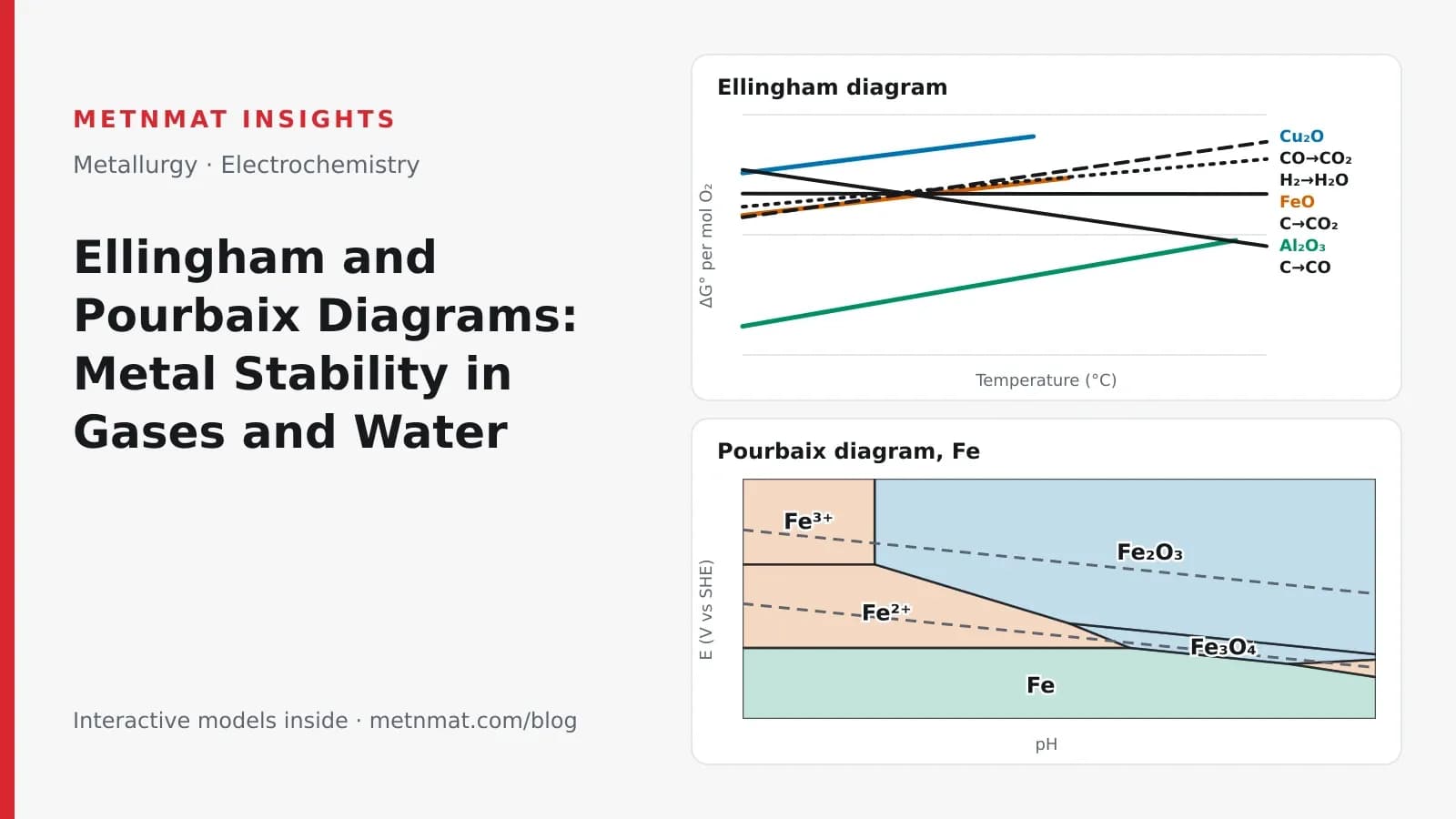
Ellingham and Pourbaix Diagrams: Metal Stability in Gases and Water
The Ellingham and Pourbaix diagrams map where a metal is thermodynamically stable, in high-temperature gases and in water. This article explains both, with interactive models.
METNMAT Research Team
- Ellingham diagram
- Pourbaix diagram
- Corrosion
- Extractive metallurgy

Modern Technologies and Innovations in Metallurgy: Shaping Industries
From nanotechnology to eco-friendly practices and shape memory alloys, discover how technology is transforming the way we produce, manipulate, and utilize metals.
Mukesh Kumar
- Metallurgy
- Nanotechnology
- Shape memory alloys
- Additive manufacturing

Metallurgical Testing in Quality Control and Assurance
Discover how metallurgical testing revolutionizes industries by ensuring material integrity, optimizing manufacturing processes, and preventing catastrophic failures.
Mukesh Kumar
- Metallurgical testing
- Quality control
- Quality assurance
- Failure analysis