Key specifications
- Product Type
- H-Type Dual-Chamber Electrochemical Cell
- Product Configuration
- 100 mL + 100 mL
- Cell Design
- Membrane-Separated H-Type Electrochemical Reactor
- Chamber Configuration
- Two Separate Electrolyte Chambers
- Chamber Capacity
- 100 mL per chamber
- Total Nominal Chamber Capacity
- 200 mL
Full details in the Specifications tab below.
100 mL + 100 mL H-Type Electrochemical H-Cell – Dual-Chamber Reactor
Also known as: H type electrochemical cell, H type electrolytic cell, two compartment electrochemical cell, dual chamber electrochemical cell
Made to order
GST invoice · Secure checkout · Datasheet on request
Product summary
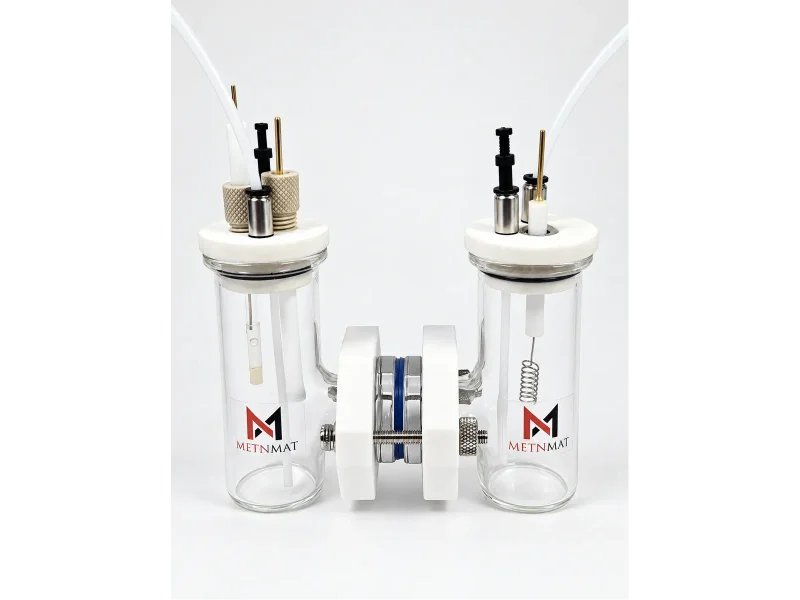
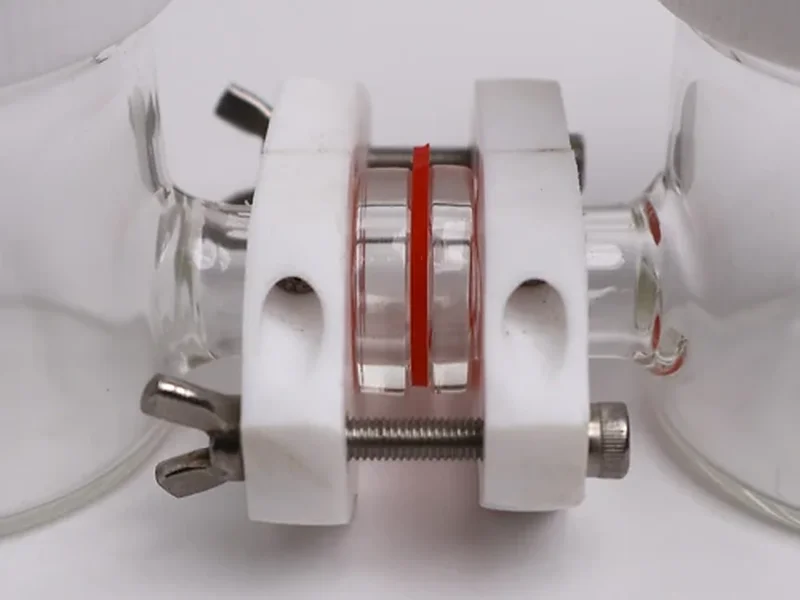
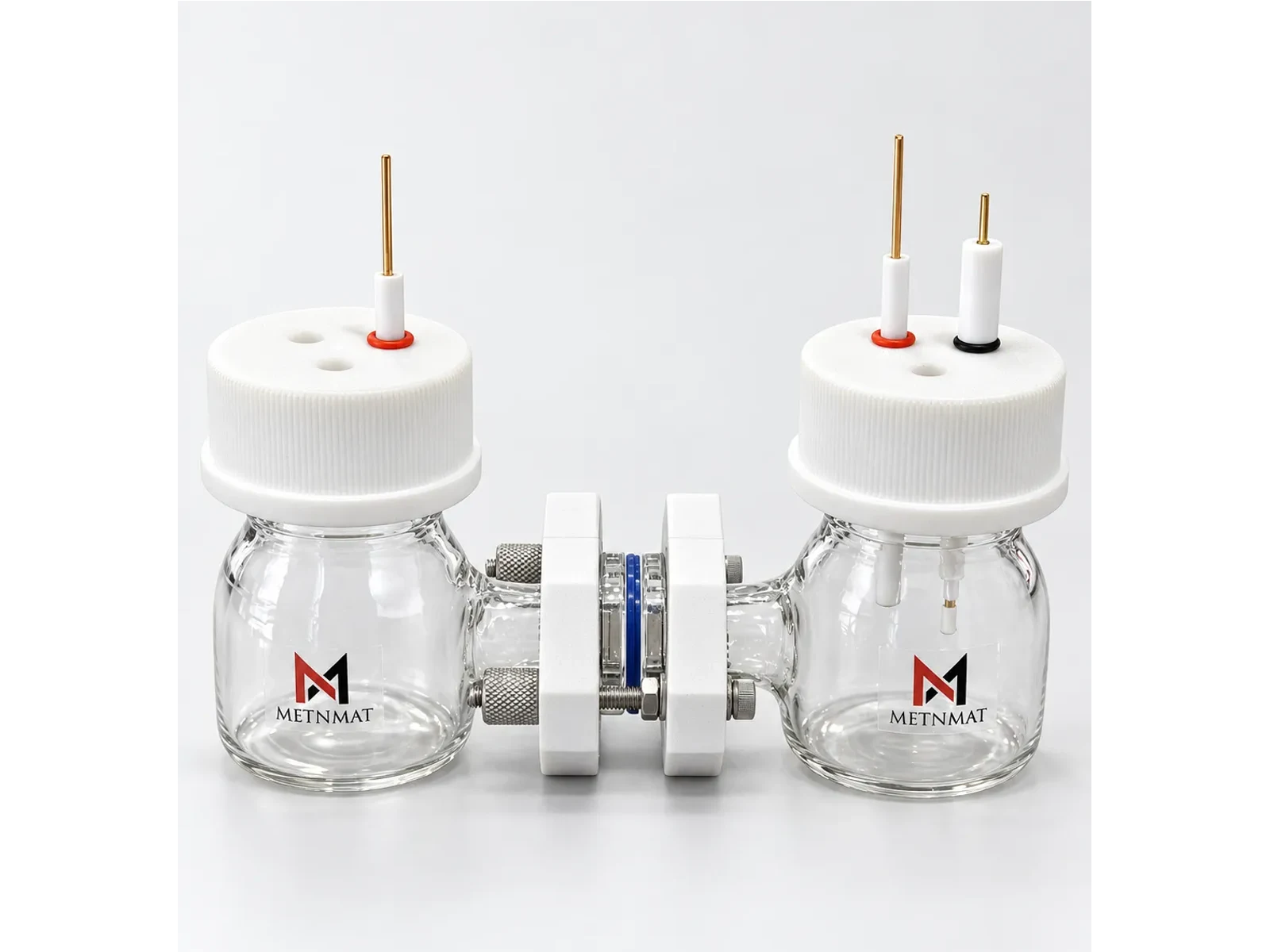
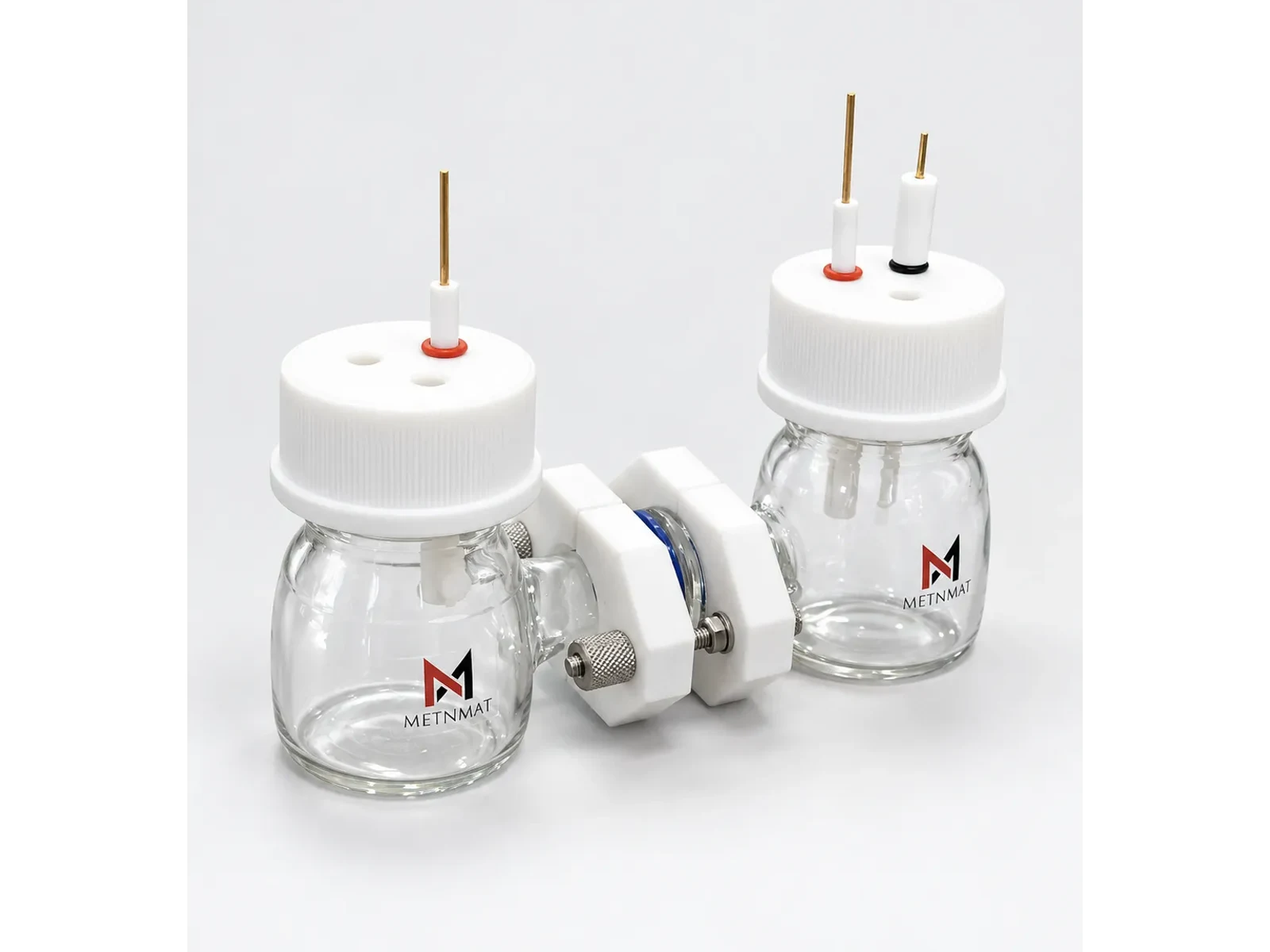
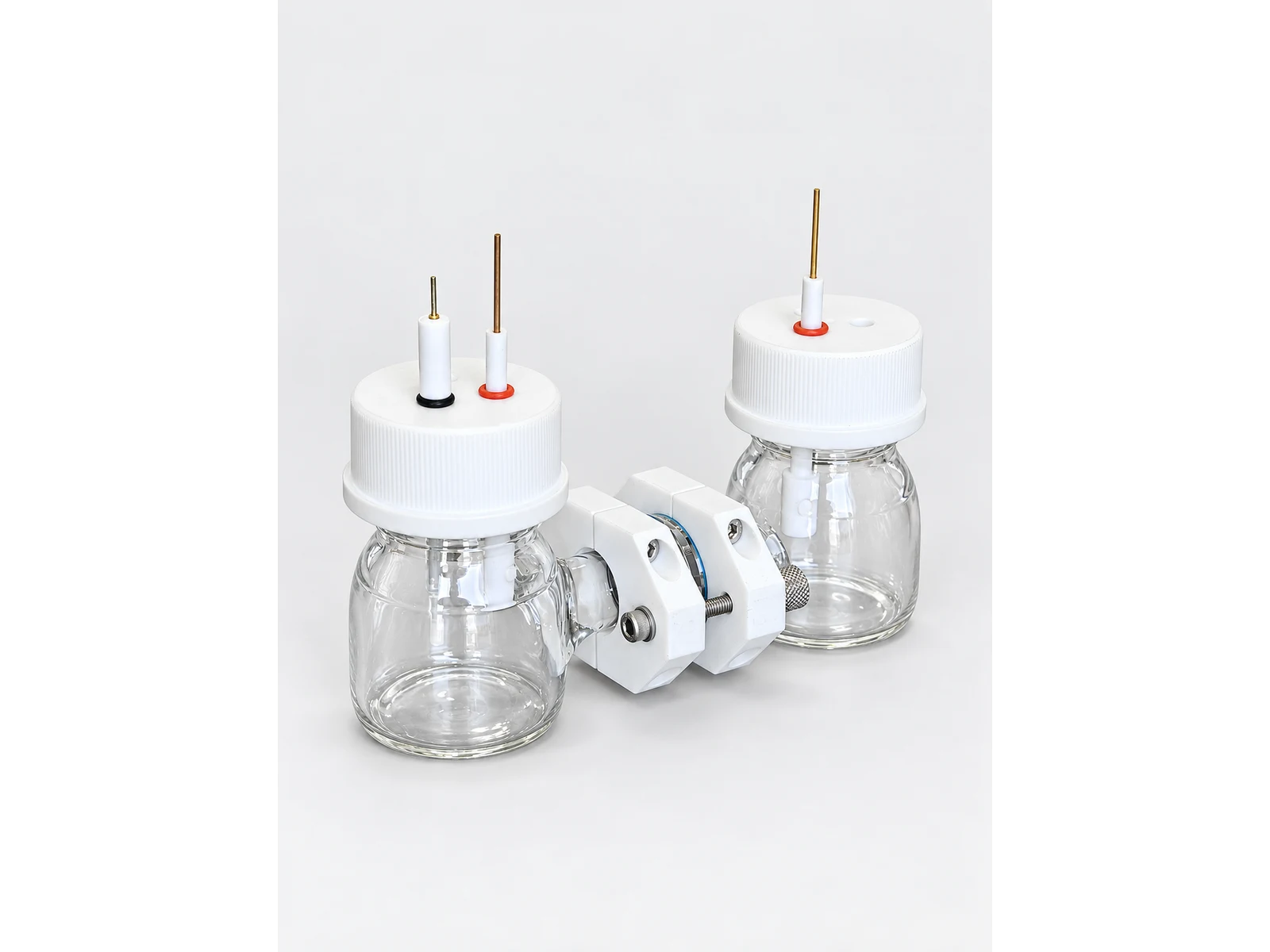
The 100 mL + 100 mL H-Type Electrochemical H-Cell is a dual-chamber electrochemical reactor designed for laboratory-scale research involving separated anodic and cathodic reaction environments. The cell consists of two glass electrolyte chambers, each with a nominal capacity of 100 mL, connected through a central membrane interface. This configuration allows researchers to maintain separate electrolyte compartments while supporting ionic transport through a suitable ion-exchange membrane or separator.
The 100 mL + 100 mL H-Type Electrochemical H-Cell is a dual-chamber electrochemical reactor designed for laboratory-scale research involving separated anodic and cathodic reaction environments. The cell consists of two glass electrolyte chambers, each with a nominal capacity of 100 mL, connected through a central membrane interface. This configuration allows researchers to maintain separate electrolyte compartments while supporting ionic transport through a suitable ion-exchange membrane or separator.
An H-cell is a two-chamber electrochemical cell, shaped like the letter H, with a membrane in the bridge between the chambers. The membrane lets ions pass but keeps the products of each electrode apart.
Typical uses
- CO₂ reduction and electrosynthesis
- Catalyst screening with separated products
- Studies needing separate anode and cathode electrolytes
Care and handling
- Choose a membrane for your electrolyte, and check that the bridge seals well.
- Purge with gas before starting if your reaction is air-sensitive.
Engineered for laboratory and industrial use. Contact us for custom specifications, bulk quantities, or application guidance.
What you get
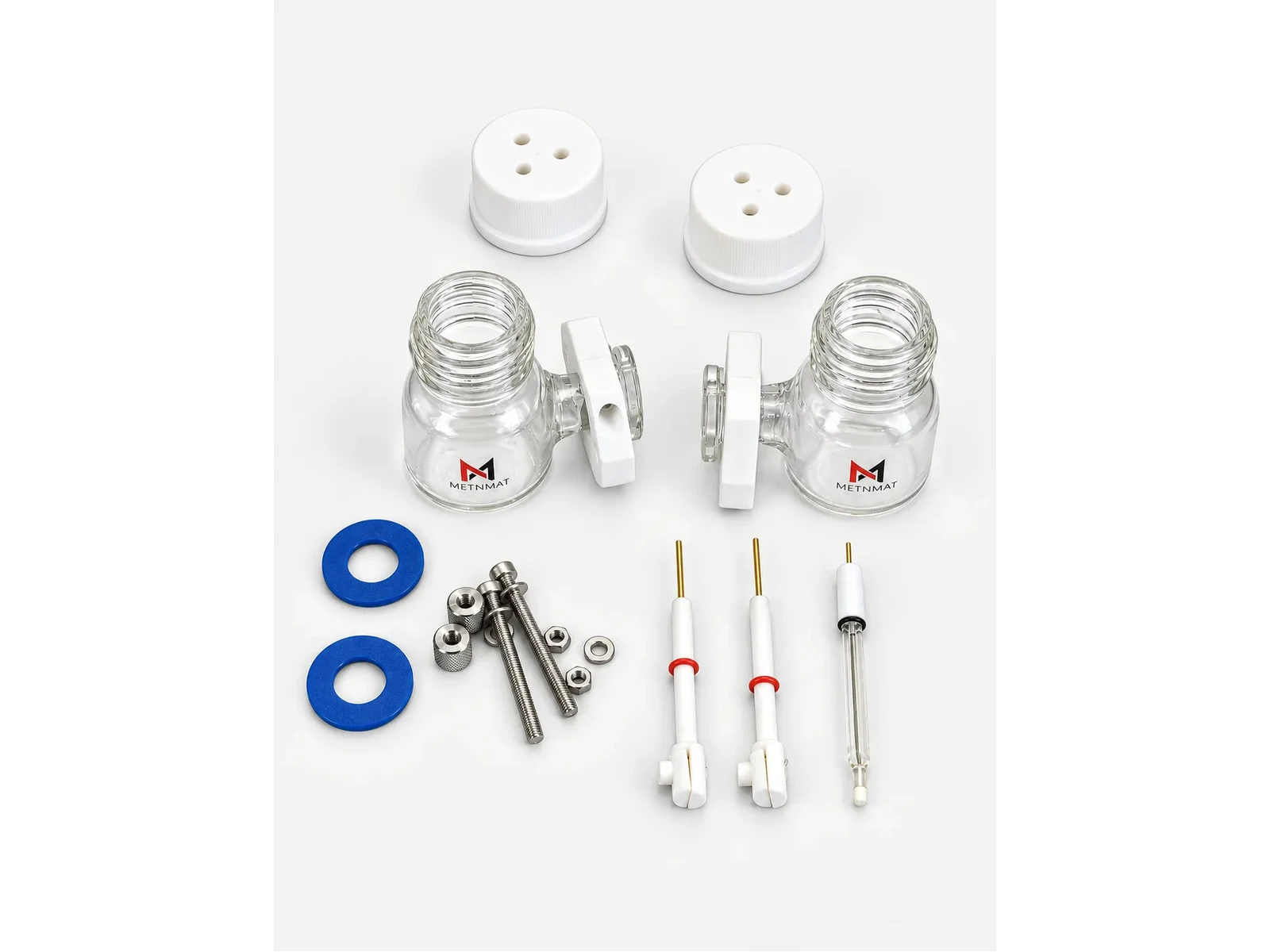
- 1 × 100 mL + 100 mL H-Type Electrochemical H-Cell – Dual-Chamber Reactor
- Test/QC certificate on request
- GST invoice
- Brand
- METNMAT
- Minimum order
- 1 pc
- Product Type
- H-Type Dual-Chamber Electrochemical Cell
- Product Configuration
- 100 mL + 100 mL
- Cell Design
- Membrane-Separated H-Type Electrochemical Reactor
- Chamber Configuration
- Two Separate Electrolyte Chambers
- Chamber Capacity
- 100 mL per chamber
- Total Nominal Chamber Capacity
- 200 mL
- Chamber Material
- Transparent Glass
- Lid Material
- PTFE
- Electrode Ports
- Multiple Electrode Access Ports
- Gas Ports
- Gas Inlet and Outlet Arrangement
- Membrane Interface
- Central Membrane-Separated Configuration
- Sealing Configuration
- Sealed Chamber and Port Arrangement
- Clamping System
- Central Mechanical Clamping Assembly
- Electrochemical Configuration
- Suitable for Two- or Three-Electrode Research Setups, depending on the electrode arrangement
- Membrane Compatibility
- Application-Specific Ion-Exchange Membranes and Separators
- Electrolyte Compatibility
- Application-Specific Aqueous or Other Compatible Electrolytes
- Operating Environment
- Laboratory-Scale Electrochemical Research
- Pressure Operation
- Suitable for controlled laboratory gas handling; pressure rating must be established for the specific manufactured configuration
- Temperature Operation
- Dependent on the glass, PTFE, sealing components, membrane, and experimental conditions
- Applications
- Electrocatalysis Research, Water Splitting Research, Hydrogen Evolution Reaction (HER), Oxygen Evolution Reaction (OER), CO₂ Reduction Reaction (CO₂RR), Membrane Evaluation, Separated-Product Analysis, Electrochemical Reaction Studies, Electrolyte Research, Ion-Exchange Membrane Research, Electrochemical Energy Conversion, Catalyst Screening, Material Science Research, Renewable Energy Research, Fuel Cell Research
- Key Features
- Dual-Chamber H-Type Design; 100 mL + 100 mL Capacity; Transparent Glass Chambers; PTFE Lids; Membrane-Separated Configuration; Electrode Access Ports; Gas Connection Arrangement; Central Clamping Assembly; Separated Reaction Environments; Laboratory-Scale Electrolyte Volume; Flexible Electrochemical Configuration; Membrane Research Compatibility
Datasheets, brochures & certificates for this product are available on request — use “Request a quote” and we'll share them.
- Free shipping within India. We also ship worldwide; international freight is confirmed after you order.
- GST invoice provided on every order.
- Dispatch lead times vary by item; bulk orders may take longer.
- No refunds. Damaged, defective, or incorrect items are eligible for a free replacement within 7 days of delivery — see our Replacement Policy.
About this H-cell
- Chamber capacity: 100 mL per chamber.
- Product configuration: 100 mL + 100 mL.
- Chamber material: Transparent Glass.
- Lid material: PTFE.
- The price is ₹17,500 plus 18% GST, which comes to ₹20,650, with free shipping in India.
- It is the lowest priced of the 3 H-cell models we list.
Compare other H-cell models
| Model | Price incl. GST |
|---|---|
| 30 mL + 30 mL H-Type Electrochemical H-Cell – Dual-Chamber Electrochemical Cell | ₹25,960 |
| H-Cell Electrochemical Cell | ₹37,760 |
How to choose an H-cell
- Volume
- Smaller chambers concentrate products for detection. Larger ones hold more electrolyte for longer runs.
- Gas-tight or open
- Choose a gas-tight cell when you analyse gas products, for example in CO₂ reduction.
- Membrane
- Fit a PEM for acidic electrolytes or an AEM for alkaline ones.
- Ports
- Count what each chamber must hold: working, reference and counter electrodes, plus a gas inlet and outlet if you purge.
- Stirring
- A small stir bar in each chamber keeps the electrolyte mixed near the electrode, so repeat runs agree better.
- Glass body
- Glass lets you watch the electrolyte and the gas bubbles. Avoid it with hydrofluoric acid and hot, strong alkali, which attack it.
Frequently asked questions
- What is the price of this H-cell in India?
- The 100 mL + 100 mL H-Type Electrochemical H-Cell – Dual-Chamber Reactor costs ₹20,650 including GST, with free shipping within India and a GST invoice.
- Is 100 mL + 100 mL H-Type Electrochemical H-Cell – Dual-Chamber Reactor in stock?
- Yes — 100 mL + 100 mL H-Type Electrochemical H-Cell – Dual-Chamber Reactor is in stock.
- Where is it made?
- Country of origin: India.
- Do you provide a GST invoice?
- Yes. Every order ships with a GST invoice.
- Can I return or replace it?
- We do not offer refunds. Eligible orders are covered by a 7-day replacement policy from the date of delivery, for items that arrive defective, damaged or incorrect. See the Replacement Policy page for the full conditions.
- Do you ship outside India?
- Yes — we ship worldwide. Shipping within India is free; international freight is confirmed after you order.
- What is an H-cell used for?
- For experiments where the products at each electrode must stay apart, such as CO₂ reduction, electrosynthesis and catalyst screening. The membrane in the bridge lets ions pass while limiting product crossover.
- When should I move from an H-cell to a flow cell?
- When you need higher current density. Dissolved CO₂ limits an H-cell, while a gas diffusion flow cell feeds gas straight to the catalyst.
- Why does an H-cell need a membrane?
- It stops what is made at one electrode from reaching the other and reacting again. In CO₂ reduction, for example, it keeps liquid products away from the anode, where they could be oxidised.
- How do I set up an H-cell?
- Clamp the membrane in the bridge so the joint seals, fill both chambers to the same level, then fit the electrodes. If you analyse gas products or need to remove oxygen, purge the chamber before you start.
- What is the difference between an H-cell and a single-chamber cell?
- A single-chamber cell holds all the electrodes in one electrolyte, so products can reach the opposite electrode. An H-cell divides the two sides with a membrane, which makes it the better choice when you measure what each electrode produces.
Related products